
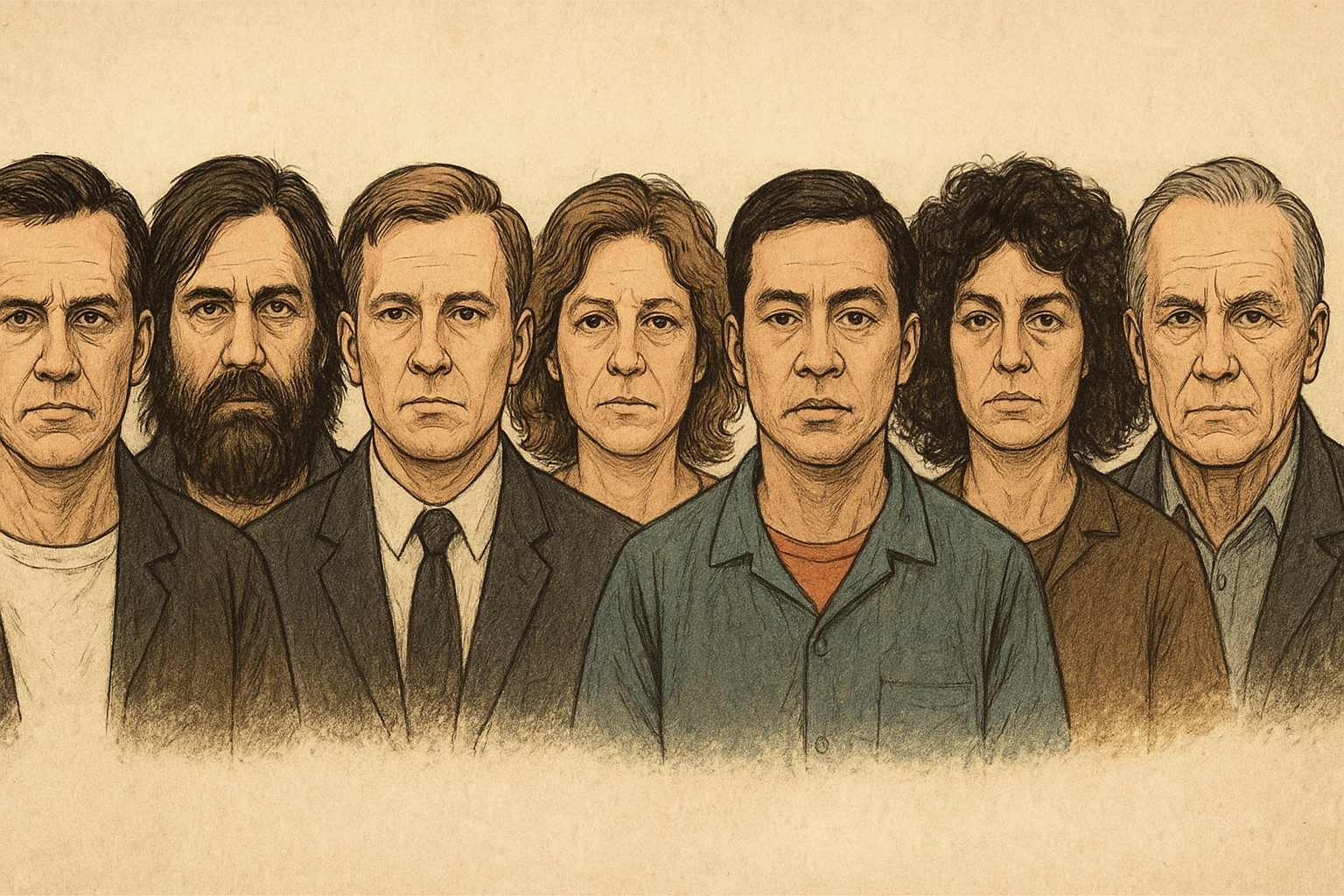
The 1990s were a turbulent decade in the United States, marked by rapid cultural change, economic shifts, and an unsettling rise in organized crime and high-profile fugitives. During this period, the FBI’s “Ten Most Wanted” list became a household term, broadcast weekly on shows like America’s Most Wanted and printed in newspapers and post offices across the nation. Some of these men and women were caught swiftly, while others spent decades eluding capture. Today, more than thirty years later, many of their stories have become cautionary tales about justice delayed but rarely denied.
Below, we revisit ten of the most infamous fugitives who appeared on the list in the 1990s — and where they are now.
1. Ramzi Yousef

Perhaps the most notorious figure of the decade, Yousef was the mastermind of the 1993 World Trade Center bombing. Captured in Pakistan in 1995, he was extradited to the U.S. and later sentenced to life in prison without parole. Today, he is serving his sentence at the high-security ADX Florence in Colorado, often referred to as the “Alcatraz of the Rockies.”
2. Eric Robert Rudolph

Rudolph was behind a series of bombings, including the deadly attack during the 1996 Atlanta Olympic Games. After years on the run in the Appalachian wilderness, he was captured in 2003. He is currently serving multiple life sentences at ADX Florence. His case remains one of the most striking examples of how long a fugitive can evade capture, even inside the United States.
3. Glen Stewart Godwin

Convicted of murder and placed on the FBI’s list in 1996 after escaping from prison, Godwin remains at large to this day. Believed to have ties to drug cartels in Mexico, his whereabouts remain unknown. He is one of the few 1990s fugitives still on the FBI’s radar.
4. Donald Eugene Webb

Webb, accused of murdering a Pennsylvania police chief in 1980, was one of the longest-standing fugitives in FBI history. Though a 90s staple on “America’s Most Wanted,” his fate was only confirmed in 2017 when his remains were found buried in Massachusetts. His story is a reminder that fugitives can run, but even decades later, truth eventually surfaces.
5. Katherine Ann Power

A radical activist turned fugitive, Power participated in a 1970 bank robbery that led to a police officer’s death. She remained underground for over 20 years before surrendering in 1993. After serving six years in prison, she has since lived a quiet life out of the spotlight, working in education and community service.
6. Andrew Phillip Cunanan

Cunanan shocked America in 1997 with a cross-country killing spree that culminated in the murder of fashion designer Gianni Versace. Before authorities could capture him, Cunanan took his own life in Miami Beach. His violent trajectory remains one of the darkest chapters of the 1990s.
7. Victor Manuel Gerena

Gerena was wanted for his role in a $7 million Wells Fargo armored car robbery in 1983, one of the largest heists in U.S. history. He spent decades on the run, largely believed to be in Cuba under protection. The FBI officially removed him from the “Most Wanted” list in 2017, assuming he had likely died in exile.
8. James Charles Kopp

Known as the “Army of God” sniper, Kopp was wanted for the 1998 assassination of Dr. Barnett Slepian, an abortion provider. Arrested in France in 2001, he was extradited and is now serving a life sentence in New York. His case is often cited in debates about domestic terrorism.
9. Angela Davis Brown (aka “La Madrina”)

A lesser-known but still infamous figure, Brown was tied to major drug trafficking operations in the 90s and evaded capture for years. Arrested in the late 1990s, she eventually cooperated with authorities and entered witness protection. Today, her exact whereabouts are unknown, but she is presumed to be living under a new identity.
10. Whitey Bulger

Although his criminal empire began long before the 1990s, James “Whitey” Bulger dominated headlines throughout the decade as Boston’s most feared mob boss. After years on the run, he was finally captured in 2011 in California. He died violently in prison in 2018, a dramatic end to one of America’s most infamous fugitives.
The 1990s fugitives show us the full spectrum of justice: from lifelong imprisonment to tragic deaths, from quiet rehabilitation to complete disappearances. Their stories illustrate not only the relentless work of federal law enforcement but also the way America obsesses over crime, punishment, and the chance of redemption.
More than thirty years later, their names remain etched into the cultural memory of the United States — a reminder that, no matter how far you run, the past always catches up.


Leave a Reply