
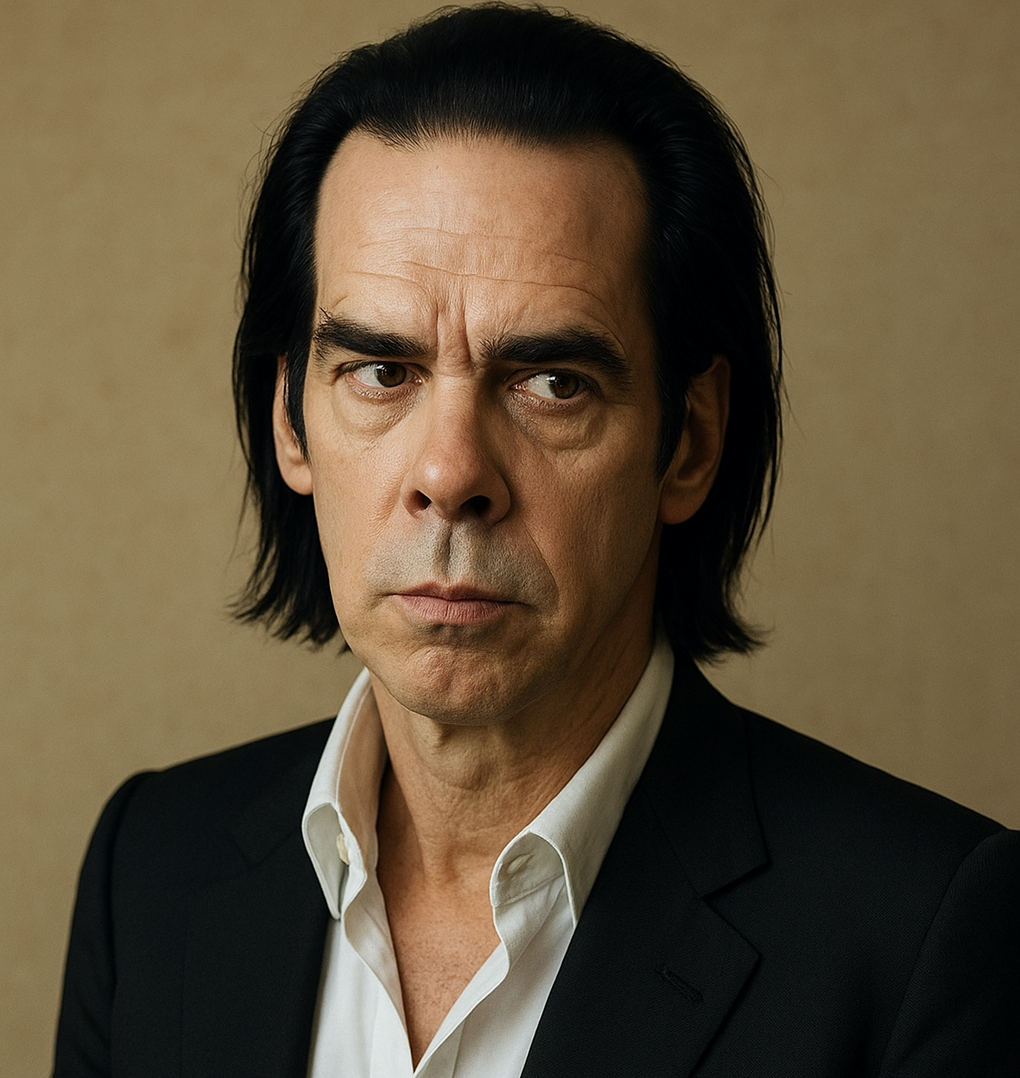
Nick Cave has never been the kind of artist content to stay comfortably within the lines. With a career spanning over four decades, he has built a reputation as a visionary songwriter, poet, and storyteller whose work is steeped in passion, darkness, and humanity. Yet, for all his success and accolades, Cave insists that art—his lifeblood—is not the entirety of life.
“Art is a lens, not the world itself,” Cave once mused in an interview, articulating a perspective that may surprise fans who have followed him from The Birthday Party to the Grinderman project, and through his solo literary endeavors. The image of the brooding, enigmatic frontman belies a more grounded philosophy: creativity is vital, but it cannot replace the daily acts of living, loving, and grappling with human fragility.
The Music That Defined Him
Few artists have cultivated a relationship with their audience as profound as Cave’s. With albums like Murder Ballads, Skeleton Tree, and Ghosteen, he has explored themes of love, death, faith, and despair with a poet’s precision. Critics often describe his work as “haunting” or “visceral,” but for Cave, these adjectives are simply side effects of the act of creation.
What distinguishes Cave is not only his lyrical intensity but his awareness of its limits. He is open about the fact that, while music can process emotion and illuminate pain, it cannot shield one from life’s challenges. This tension—between the power of art and its insufficiency—is central to his worldview.
Literature and the Spoken Word
Beyond music, Cave has authored novels, essays, and screenplays. His 1987 novel And the Ass Saw the Angel and his later The Death of Bunny Munro are exercises in narrative intensity, delving deep into the human psyche. Yet even here, he cautions against conflating artistic creation with existential fulfillment.
“I write to understand, not to escape,” he explains. “Words are tools. They help you confront your own life, not replace it.” For Cave, literature complements music rather than competes with it. In interviews, he has reflected on the balance between public performance and private life, stressing that being immersed in creation can never be a substitute for connection with others.
A Life Beyond the Stage
Nick Cave’s philosophy extends to the quiet moments between albums, tours, and literary deadlines. He has spoken candidly about fatherhood, grief, and personal loss, most notably following the tragic death of his son Arthur in 2015. These events shaped his recent work, and they underscore his belief that real life—the raw, unedited moments—is what fuels creativity.
For Cave, art is a compass pointing toward understanding, not a map that shows the full territory. Whether collaborating with the Bad Seeds, performing solo, or writing fiction, he constantly negotiates the tension between public persona and private reality. Friends and collaborators note his ability to remain present and compassionate even amid intense artistic engagement.
The Philosophy of Balance
In an era when social media often equates public visibility with personal significance, Cave’s stance is refreshingly contrarian. He rejects the notion that constant artistic output defines worth. Instead, he advocates for measured engagement with creativity, suggesting that meaningful work emerges from a life that includes empathy, reflection, and human connection.
“Art is seductive, but it doesn’t feed the soul by itself,” he once said. “It’s the relationships, the small gestures, the acts of living well, that give the work meaning.”
Legacy and Influence
Nick Cave’s influence spans generations of musicians, writers, and filmmakers. Yet what makes his story compelling is not just his talent, but his integrity. He reminds fans and fellow artists alike that success in the creative world does not exempt anyone from the responsibilities and joys of ordinary life.
As Cave continues to tour, write, and perform, he models an approach to creativity that is both ambitious and grounded. For him, art is a tool for understanding, not an endpoint. And perhaps that is the most enduring lesson from one of the most iconic voices of modern music: the human experience always comes first, even when the songs, poems, and stories echo long after the last note has faded.


Leave a Reply